The Complexity of Product Development
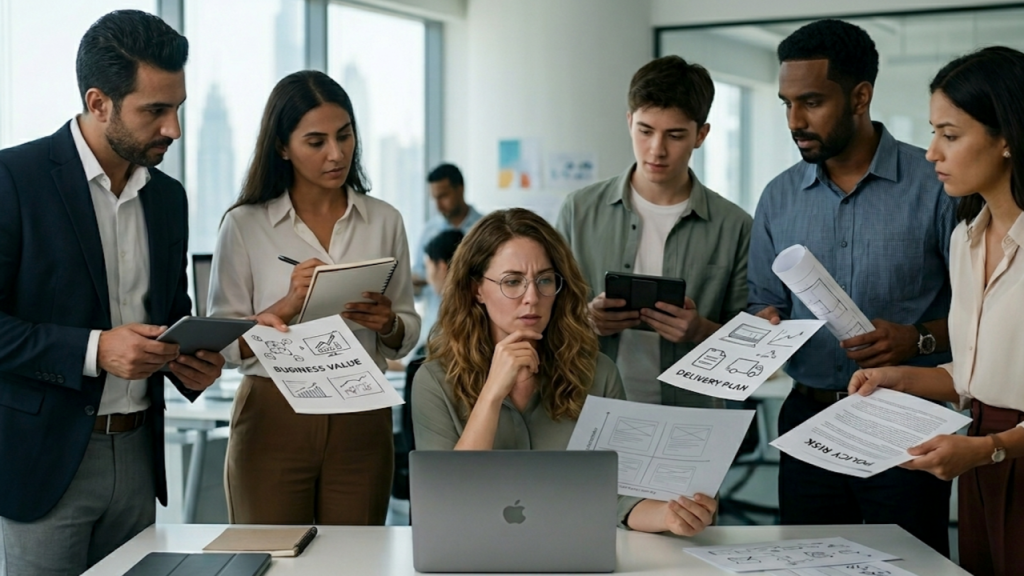
Product development is an intricate, multifaceted process. While frameworks and methodologies provide structure, no two organizations implement them in exactly the same way. The diversity of roles in the IT sector—ranging from UX designers to engineers and product managers—ensures that responsibilities often overlap. The key to success in this dynamic environment is not rigidly defined boundaries but rather seamless collaboration.
Today, more than ever, cross-functional teamwork is not just a best practice—it is a business imperative. Leaders must foster environments where teams do not operate in silos but instead engage in continuous dialogue throughout the product lifecycle.
Framing the Problem: A Critical Design Process
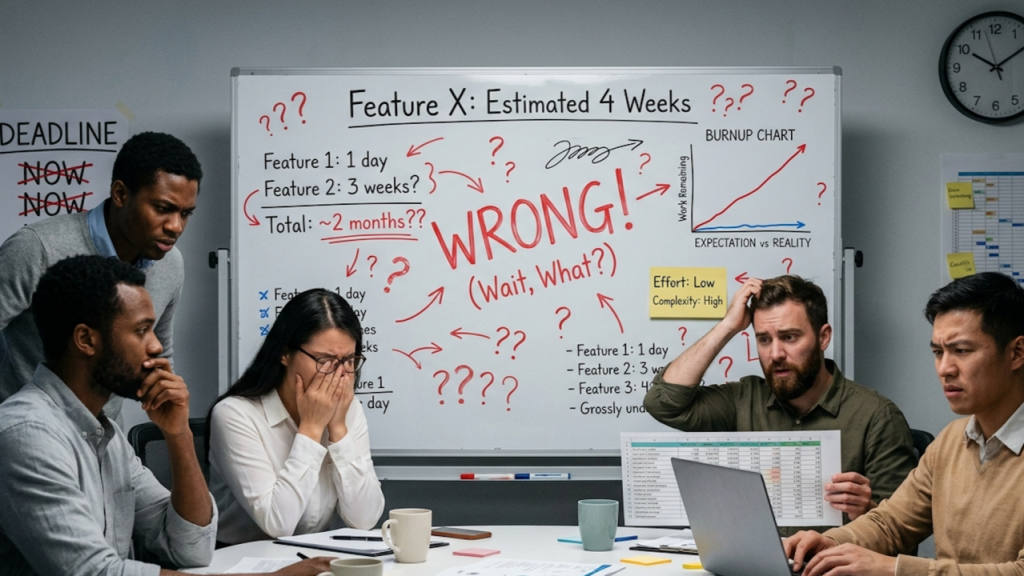
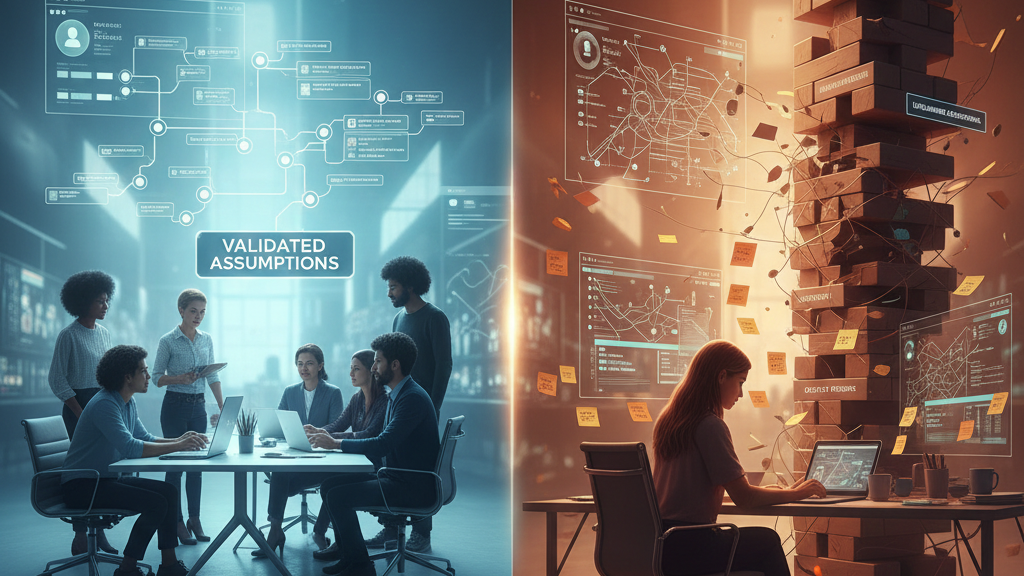
Regardless of whether your team follows a task-centered or design-centered approach, failing to define the problem correctly leads to wasted effort and misaligned solutions.
Every project begins with a requirement—whether it’s a roadmap item, an epic, or a task. However, a requirement is merely a high-level prompt. The real challenge is translating this prompt into a clear, actionable problem statement. This is where leadership is crucial: ensuring that problem definition is not just a functional responsibility but a collaborative effort across disciplines.
The Role of Design Scenarios in Problem Definition
To effectively define a problem, one must first determine the appropriate method for doing so. Various methodologies exist, and relying solely on one approach limits the accuracy and depth of problem identification. A common pitfall in design is using only user stories or user flows to define problems—while essential, these tools are often insufficient on their own.
This is where Design Scenarios come into play.
“Design Scenarios are narratives or descriptions that depict how a user might interact with a product or service in a particular situation or context. These scenarios are often used in the design process to explore and communicate potential use cases and user interactions. Design scenarios help designers empathize with users by putting them in the context of real-world situations and understanding their needs and behaviors in different scenarios. They also serve as a tool for evaluating and refining design concepts, as they can highlight areas where the user experience could be improved or where certain features may be missing. Overall, design scenarios are a valuable method for exploring and communicating user interactions and experiences throughout the design process.”
In a nutshell: Design scenarios are narratives that illustrate how users interact with a product or service in specific contexts. They serve multiple purposes:
- Bridge user needs with potential technological solutions
- Facilitate reflection throughout the design process
- Anchor design discussions
- Provide quick, iterative insights
- Support usability testing
- Help anticipate unintended consequences
Key Elements of a Design Scenario
A well-structured design scenario includes the following components:
- Setting: The situation and context of use
- Agent(s): The people involved in the scenario
- Goals: The objectives the agents aim to achieve
- Actions: The steps taken to accomplish these goals
- Events: Any occurrences that impact the user’s experience
Types of Design Scenarios
- Problem Scenarios – Describe the current state and challenges users face.
- Goal (Task-Based) Scenarios – Outline what the user wants to accomplish.
- Activity Scenarios – Translate existing user practices into new design features.
- Full-Scale Task Scenarios – Detail the step-by-step actions required to complete a task.
- Information Scenarios – Define how users perceive and process information.
- Interaction Scenarios – Illustrate user actions and system responses.
Techniques for Scenario-Based Problem Definition
There are multiple tools and methodologies designers can use to enhance problem definition through scenarios:
- Personas – Represent user archetypes to contextualize needs.
- Storyboarding – Visually map out user experiences.
- User Stories – Provide a concise narrative from the user’s perspective.
- Use Cases – Detail specific system interactions for achieving user goals.
- User Journey Mapping – Illustrate the steps and emotions involved in achieving an objective.
- Experience Mapping – Capture broader touchpoints and pain points.
- Service Blueprinting – Link user interactions to internal processes.
- Jobs-to-Be-Done (JTBD) – Define problems based on user motivations.
- Future Scenarios & Speculative Design – Anticipate emerging user needs.
- Cognitive Walkthroughs – Simulate user interactions to uncover usability issues.
- Task Analysis – Break down user tasks to identify inefficiencies.
- Red Routes Analysis – Highlight critical workflows that require optimization.
- Wireflow Diagrams – Combine wireframes with interaction flows.
- Empathy Mapping – Align design with users’ thoughts and emotions.
- Scenario-Based Usability Testing – Use real-world scenarios to evaluate usability.
Collaboration and Role Clarity in Problem Definition
Returning to the core principle of collaboration, effective product teams do not treat user story creation as a single-person task. Instead, it is a team-wide initiative, with each role contributing unique expertise:
- Product Manager (PM) / Product Owner (PO): Owns the product vision and ensures alignment with business goals.
- UX Designers: Provide user research insights, wireframes, and usability recommendations.
- Business Analysts (BA): Translate business requirements into actionable user stories.
- Engineering Team: Assesses technical feasibility and implementation strategies.
- QA/Testers: Define acceptance criteria and edge cases.
- Customer Support & Sales Teams: Provide direct user feedback and highlight common pain points.
The Value of a Holistic Approach
By integrating various perspectives and employing diverse scenario-based methodologies, teams can more accurately define problems, leading to better-designed solutions. Effective problem definition fosters improved collaboration, more intuitive user experiences, and ultimately, more successful products.
Design scenarios offer a powerful framework for identifying user needs, refining product concepts, and facilitating cross-functional collaboration. By mastering these approaches, designers and product teams can create more meaningful, user-centered solutions that align with both business objectives and real-world usability.